There is a photograph of me on a ferry, mid-strait. Behind my shoulder the Savarona sits at her mooring — white hull, ochre funnels, the yacht Atatürk spent his last summer aboard. Ahead, out of frame, a bridge hangs between two continents. On my head, a cap from a university an ocean away. Under the hull, the water is doing something no other water I know does: it is moving in two directions at once.
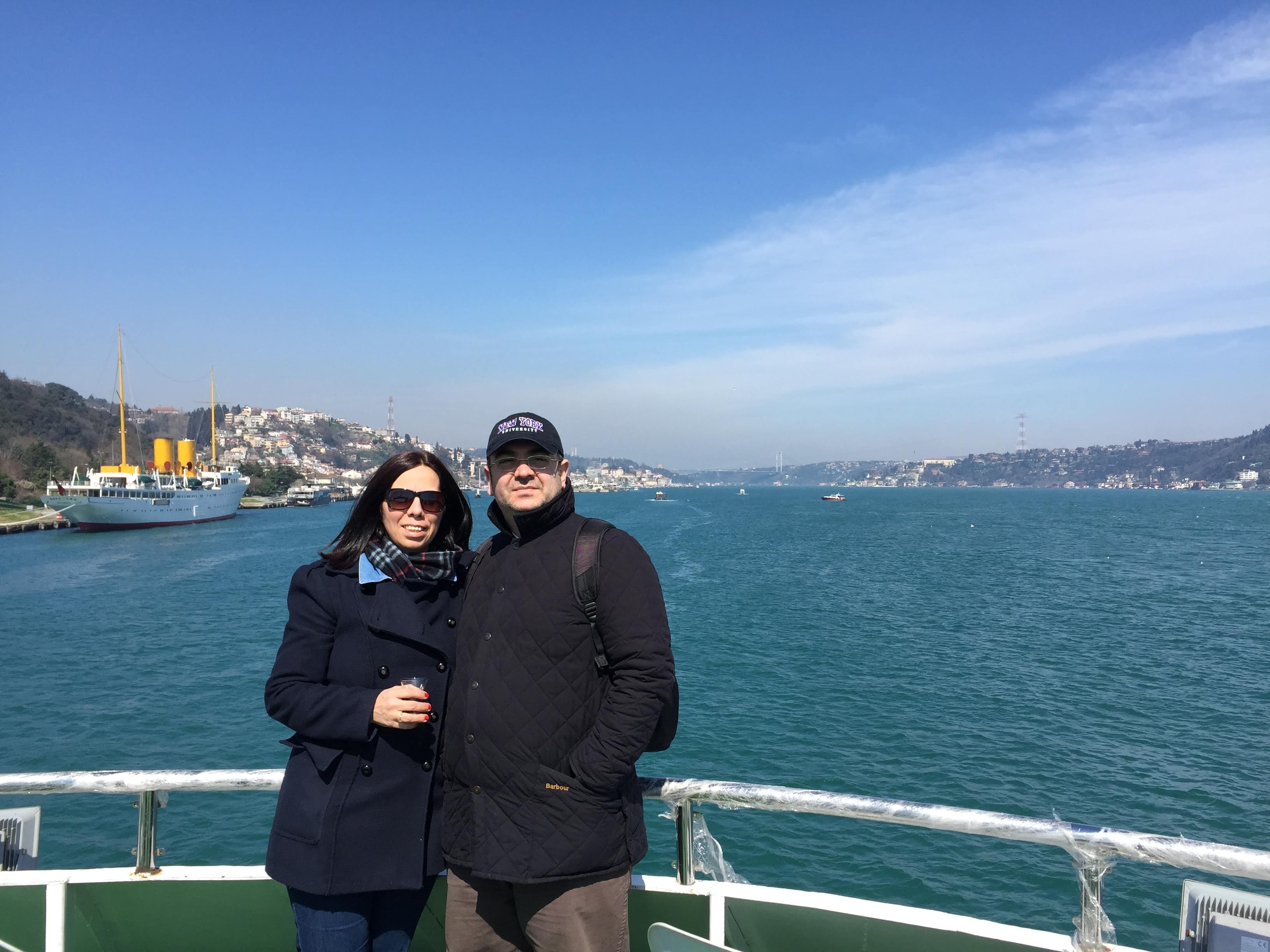
Mid-strait, on the ferry — the photograph the opening line describes.
I was born on this water. Not near it — on it, in every way that counts. The hospital, the house, the school run, the first job: all of it within sound of the ferries. The strait the world calls the Bosphorus holds Europe on one bank and Asia on the other, and if you are born there, you do not learn geography as a subject. You learn it as a commute.
The name itself is a crossing. The old Greek — bous poros, the ox's ford — comes from the myth of Io, who swam this water to pass from one world into another. The oldest name this strait carries simply means: the place where you cross. I have read many definitions of travel since. None of them improves on that.
And the current runs both ways. Oceanographers describe it without poetry, which is how you know it is true: lighter Black Sea water runs south along the surface; heavier, saltier water from the Marmara runs north underneath. Two rivers in one channel, stacked, moving against each other, all day, forever. The boatmen knew it long before anyone measured it — on every quay you will hear the story of weighted lines lowered into the deep stream so the undercurrent would tow a boat north against the visible water. I cannot promise every telling is true. I can promise it is told on every quay.
I grew up assuming all cities were like this, and was well into adulthood before I understood how alone Istanbul is in it. Nowhere else does the geography refuse so plainly to pick a side. You cross from continent to continent for the price of a ferry token, tea in a tulip glass, gulls holding station off the stern. Kandilli slides past on one side, Arnavutköy on the other. Rumeli Hisarı — a fortress raised in a single season in 1452 — still supervises the narrowest bend, and the wooden yalıs still keep their boathouses open to the water like a held breath.
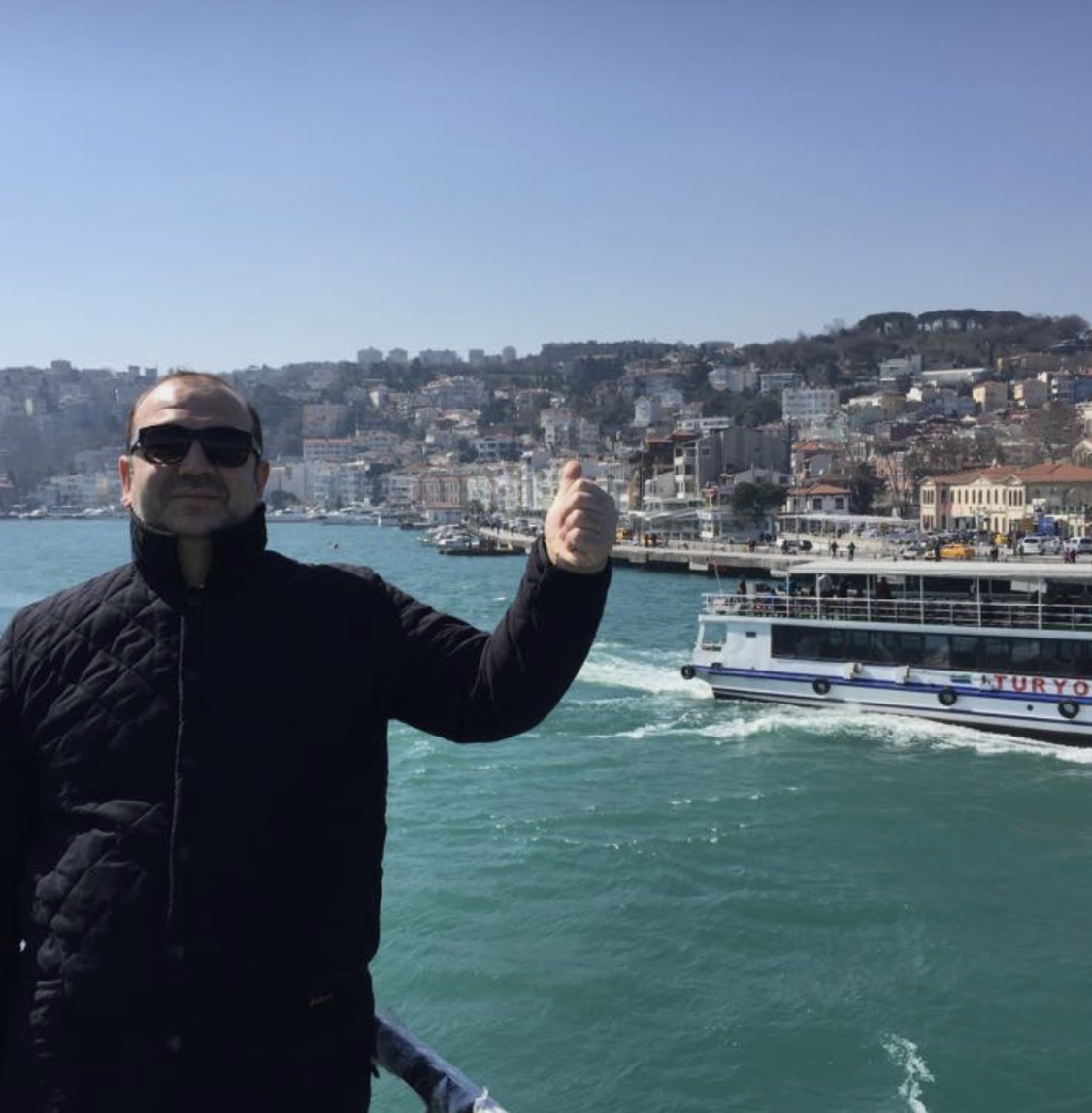
Another crossing, another year — the commute never gets old.
I studied above that bend. Boğaziçi University takes its name from the strait itself — Boğaziçi, "within the strait" — and its campus looks down on the water from beside the fortress walls. The strait was the view from the library. You do not graduate out of a view like that; it grades you for the rest of your life.
So the photograph is honest in a way I did not plan. A man born between two continents, wearing a third one on his head, standing on water that will not choose a direction — with Atatürk's ship behind him. The Savarona has her own crossing story: built in Hamburg for an American heiress of the Roebling family, the bridge-builders of Brooklyn, and ending up here, moored between bridges, between continents, between eras. Even the ships on this water live in the in-between.
More than thirty years of hospitality experience took me a long way from that ferry deck — other straits, other shores, weeks planned for people crossing out of something and into something else. People often ask me what a week away is actually for. The Bosphorus answered that before I had the words. The point was never the far bank. The point is the crossing itself — the stretch where you are held between, where both shores stay visible, and where, if you look honestly at your own life, the surface and the undercurrent are moving in different directions and both of them are yours. A week away, done properly, is a threshold. Not a destination.
The ferries still cross. The Savarona still sits at her mooring. The undercurrent still runs north while the surface runs south, and neither has ever won. When I say I read travel from the in-between, this is the in-between I mean.
I was born on it.
Sources
- Two-layer exchange flow of the Bosphorus — surface outflow south, saline undercurrent north; physical oceanography of the Turkish Straits. [Evidence]
- Savarona: built 1931 at Blohm & Voss, Hamburg, for Emily Roebling Cadwalader of the Roebling (Brooklyn Bridge) family; acquired for Atatürk in 1938; his final summer spent aboard. [Evidence]
- Rumeli Hisarı raised in a single building season, 1452. [Evidence]
- Bous poros / the Io myth as the origin of the name "Bosporus." [Tradition — classical myth, discussed in classical scholarship]
- Weighted-line use of the undercurrent by Bosphorus boatmen. [Tradition — quay-side accounts; told, not proven]
Weighing a trip like this? Start with a Free Introduction · 20 minutes. No obligation. → Or start with Eight Questions Before You Book.