Pamukkale means “cotton castle,” and the photographs — blinding white terraces of mineral water — are real. What the brochures skip is that this has been a thermal-cure destination for two thousand years: the Greco-Roman city of Hierapolis was built here precisely because of the warm, calcium-rich springs. Read honestly, the terraces are the photograph; the spring water, the antiquity, and the quiet at the edges are the reason to go.
What the water actually does
The springs emerge at around 35°C, saturated with calcium bicarbonate; as the water cools and releases its gas, it lays down the white travertine that built the terraces over millennia. Bathing in that warm, faintly effervescent mineral water has been considered restorative since antiquity. The centrepiece is the Antique Pool (the so-called Cleopatra’s Pool), where you swim at about 36°C among fallen marble columns toppled by an ancient earthquake — antiquity you float through.
What’s real, what’s roped off
To protect the water and the formations, most of the travertine is now off-limits: you walk a marked barefoot path through the running shallows, and some terraces are deliberately kept dry and refilled in rotation. Knowing that in advance keeps your expectations honest — it is a managed natural monument, not an open spa. Above it, Hierapolis is a vast, walkable ancient city — necropolis, theatre, colonnaded street. Nearby Karahayıt has iron-red springs, and Laodikeia adds a major ancient site few visitors reach.
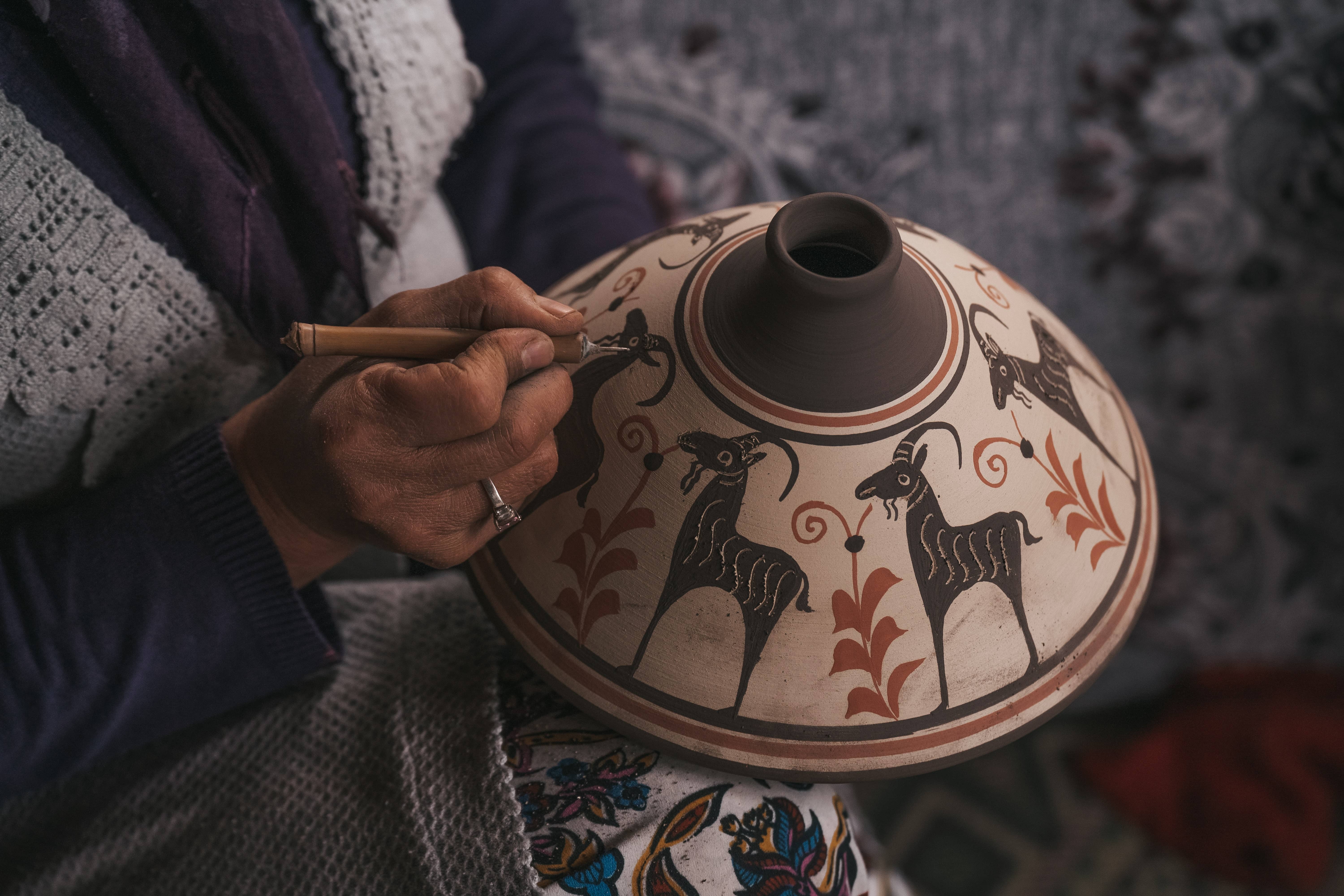
A Denizli potter paints the old Anatolian motifs — living craft beside the ancient cities.
The honest caveat
The terraces are mobbed from mid-morning to mid-afternoon with day-trippers; arrive at opening or stay for last light and a near-empty Pamukkale appears. The village below is a tourism strip — the restoration is in the early-hour water and the ruins, not the souvenir street. Go in spring or autumn, early or late in the day.
Who it’s for — and who it isn’t
For someone with a genuine interest in thermal water and antiquity, who will trade the midday photo for a dawn walk and a swim among Roman columns. Less suited to someone wanting a polished private spa — Pamukkale is an open monument, and its magic is on its own terms.
The habit this place teaches
Water that takes the weight. Swimming in the Antique Pool, and walking barefoot on the marked path across the travertine, is movement without load: the body moves, and the joints are spared.
At home in Ontario. Pool walking at a community pool every week, and the hot–cold–rest cycle at Thermëa in Whitby once a month.
Not sure which habit is yours? Ask the guide at owj.life, an AI conversation built on the way I match people to places. It starts from the habit, not the destination.
Pamukkale rewards the early hour and the long view — the water, the ruins, and the quiet the day-trippers miss. Start with a Working Hour — CA$50 and we’ll time it right.